India Reaffirms Early US Trade Deal Commitment, Rejects Excess Capacity Charge in USTR Report
India commits to early conclusion of India-US Trade Deal after USTR Section 301 findings. Rejects excess manufacturing capacity claims amid proposed 25% tariffs. Full details inside. Tags: India US Trade Deal, USTR Report, US tariffs on India, bilateral trade agreement, Section 301 investigation, Commerce Ministry statement, Trump tariffs Asia, excess capacity charge, India US negotiations 2026
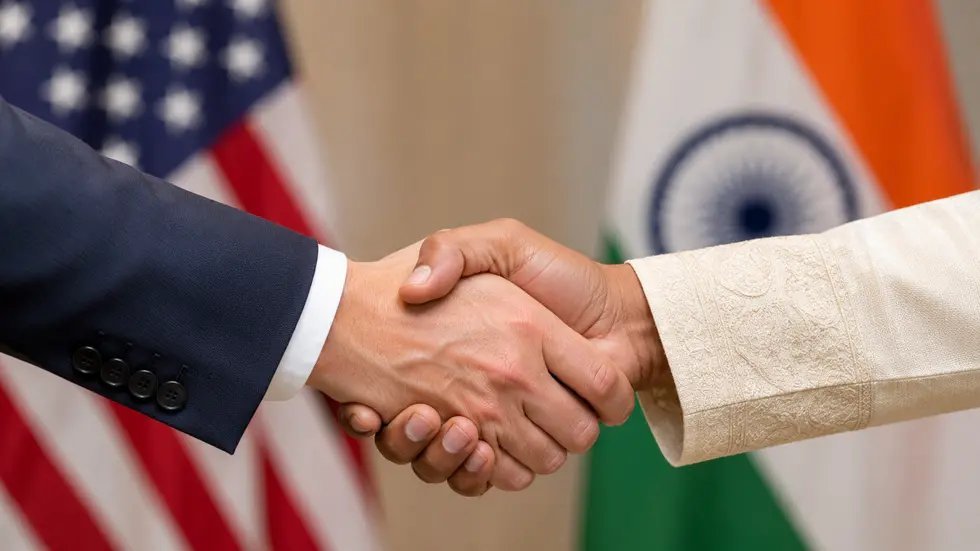
India on Wednesday strongly reaffirmed its commitment to the early conclusion of the long-awaited India-US Trade Deal, while firmly rejecting allegations of structural excess manufacturing capacity raised in the latest United States Trade Representative (USTR) findings. The response came within hours of Washington proposing a new round of tariffs that could hit Indian imports with duties as high as 25 percent, with a possible reduction to 17 percent if a bilateral agreement is finalized.
The developments form part of a broader Section 301 investigation launched by the USTR into the manufacturing policies and practices of 14 economies. The list includes India, China, the European Union, Singapore, Switzerland, Indonesia, Malaysia, Cambodia, Thailand, Korea, Vietnam, Taiwan, Bangladesh, Japan, Norway and Mexico. The probe focuses on concerns over structural excess capacity and production in manufacturing sectors.
In a clear and measured statement, the Union Commerce Ministry said the government has taken note of the USTR’s Notice of Determination and Request for Comments. The notice is currently under examination.
“India engaged constructively throughout this investigation. In response to the Notice of Initiation and in subsequent proceedings, the Department of Commerce stated that India does not have structural excess capacity in any sector,” the ministry underlined.
Officials reiterated that any trade-related concerns between the two countries should be addressed within the framework of the ongoing negotiations for a Bilateral Trade Agreement rather than through unilateral measures. The government remains committed to working closely with the United States towards the early conclusion of the India-US Bilateral Trade Agreement, as announced on 2 February 2026 and in accordance with the Joint Statement issued on 7 February 2026.
This consistent position reflects New Delhi’s preference for negotiated outcomes over punitive tariffs. India has maintained that it does not operate with structural excess capacity in manufacturing and has participated fully in the investigation process.
Under the Trump administration’s proposal, Indian goods would face a 25 percent tariff in the absence of a trade deal. However, if the bilateral agreement is concluded, the rate would drop to 17 percent. This would give India a modest advantage over several Asian competitors: Bangladesh, Cambodia, Indonesia, Malaysia and Thailand would face 18 percent under similar deal terms, while Vietnam and China would face 20 percent.
The two-tier structure is designed to create negotiating leverage. Countries that reach agreements with Washington receive preferential treatment, while those that do not face higher duties and the possibility of further measures, including additional duties or import quotas, depending on the final USTR determination.
Trade analysts note that the proposal effectively revives elements of earlier reciprocal tariff approaches under a different legal mechanism. The Global Trade Research Initiative (GTRI) has criticized the framework, arguing that it allows the United States to extract concessions from trading partners without necessarily resolving the underlying capacity concerns that prompted the investigations.
According to GTRI, the arrangement offers India a calculated one-percent edge over several Southeast Asian economies and a three-percent edge over Vietnam and China if a deal is struck. Without an agreement, the rate could rise to 25 percent, with additional risks attached to an adverse final ruling.
The latest developments occur against the backdrop of intensified trade discussions between New Delhi and Washington throughout 2026. Both sides have publicly expressed interest in finalizing a comprehensive bilateral trade agreement that would address market access, regulatory barriers, and sectoral concerns.
India has consistently argued that differences should be resolved through dialogue rather than tariffs. The Commerce Ministry’s latest statement reinforces this stance, emphasizing constructive engagement during the Section 301 process and a continued preference for negotiated solutions.
For Indian exporters, the difference between a 17 percent and 25 percent tariff is significant. Sectors such as textiles, pharmaceuticals, engineering goods, chemicals, and automotive components could face varying degrees of impact depending on the final rates and any product-specific exclusions that may emerge from further negotiations or the USTR’s final determination.
The proposed tariffs form part of a wider review covering multiple Asian and other economies. The inclusion of both large manufacturing bases and smaller export-oriented economies suggests Washington is taking a broad approach to what it views as excess capacity issues in global manufacturing.
GTRI has described the two-tier tariff proposal as a strategic tool that strengthens the United States’ bargaining position. By linking lower duties to the successful conclusion of trade agreements, Washington creates clear incentives for partners to accelerate talks while retaining the option of higher tariffs if negotiations stall.
The think tank has also pointed out that the approach may secure commercial concessions without fully addressing the structural capacity questions that justified the original Section 301 investigations. This observation highlights a potential gap between the stated rationale of the probe and the practical outcomes of the tariff design.
Indian officials, for their part, continue to stress that the country does not maintain structural excess capacity. They note that India’s manufacturing growth has been driven by domestic demand, policy support for production-linked incentives, and efforts to integrate more deeply into global value chains rather than by deliberate overcapacity strategies.
The USTR has issued a Notice of Determination and Request for Comments, opening a window for further submissions. India has indicated that the notice is under examination. Parallel to this process, bilateral trade negotiations continue, with both sides publicly committed to an early conclusion.
The outcome of these parallel tracks will shape the near-term trade relationship. A successful bilateral agreement could lock in the lower 17 percent rate for Indian goods and provide greater predictability for exporters and investors. Failure to reach an agreement would leave open the possibility of the higher 25 percent rate and potential additional measures.
Market participants and industry associations in India are closely monitoring developments. Many exporters are assessing contingency plans while expressing hope that the constructive tone of official statements will translate into accelerated progress at the negotiating table.
India’s response to the USTR findings is clear and consistent: rejection of the excess capacity allegation, affirmation of constructive engagement during the investigation, and a strong preference for resolving differences through the ongoing India-US Trade Deal negotiations. The proposed tariff framework introduces both risks and incentives. A 25 percent rate without a deal contrasts with a more competitive 17 percent rate if an agreement is reached, giving India a relative advantage over several regional competitors.
As the Section 301 process moves forward and bilateral talks continue, the coming weeks will be critical. New Delhi’s message remains that trade concerns are best addressed through negotiation rather than unilateral action, and that it remains fully committed to concluding the bilateral agreement at the earliest possible date.
The episode underscores the complex interplay between investigative tools, tariff leverage, and negotiated outcomes in contemporary trade diplomacy. For India, the priority is clear—secure an early and mutually beneficial India-US Trade Deal while defending its manufacturing record against claims of structural excess capacity.